Super Petrochemical refinery under scrutiny over approval, import irregularities

- সংবাদ প্রকাশের সময় : ০১:০৬:৫৪ অপরাহ্ন, বুধবার, ১১ নভেম্বর ২০২৬ ১৩ বার পড়া হয়েছে
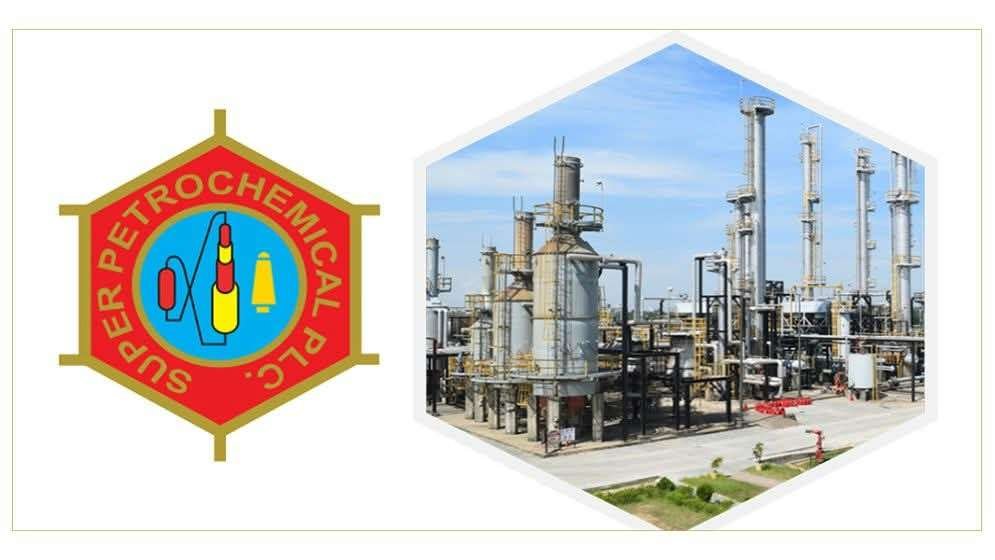

A fresh initiative has been taken to approve the oil refinery of Super Petrochemical PLC despite the company having established the facility without obtaining the mandatory government approval.
The company imported a substantial quantity of machinery without securing the required government clearance, while government agencies allegedly remained silent. Even allegations of customs duty evasion involving hundreds of crores of taka in machinery imports have yet to be investigated. Meanwhile, efforts are reportedly underway, with the backing of influential quarters, to grant the company approval.
The Bangladesh Petroleum Corporation (BPC) formed a seven-member committee on Tuesday to recommend whether Super Petrochemical PLC should be allowed to operate its oil refinery. The committee will inspect the facility to determine whether it meets all the requirements stipulated in the 2023 policy for establishing private-sector refineries.
The committee members are scheduled to visit the refinery of the TK Group today (Wednesday).
The policy clearly states that no refinery can be established without government approval. However, senior BPC officials have confirmed that Super Petrochemical has established its refinery without obtaining such approval.
According to relevant sources, the company continued construction of the refinery and imported a substantial quantity of machinery without the mandatory government clearance. Allegations of customs duty evasion, along with its application to import 1.2 million tonnes of crude oil annually, have raised serious questions and concerns in the energy sector.
Energy experts fear that establishing and operating such a sensitive industrial facility without ensuring the necessary approvals and safety measures could pose risks to the country’s energy security.
The seven-member committee was formed through an office order signed by BPC Secretary Shahina Sultana on Tuesday. The committee is headed by the BPC General Manager (Commerce and Operations).
Other members include the Deputy General Managers (Operations) and (Planning and Shipping) of Eastern Refinery PLC (ERPLC), the Deputy General Manager (Operations) of JOPL, the Deputy General Manager (Operations) of MPL, and the Assistant General Manager (Planning) of ERPLC. The BPC Manager (Commerce and Operations) will serve as the committee’s member secretary.
According to the office order, the committee must conduct an on-site inspection to determine whether Super Petrochemical PLC has fulfilled all the conditions stipulated in the Policy for Establishment of Private Refineries, Import, Storage, Processing, Transportation and Marketing of Refined Petroleum Products, 2023, formulated by the Energy and Mineral Resources Division.
The committee must submit its report to the BPC chairman within three days of the inspection.
An analysis of government documents and discussions with relevant individuals reveal that the Chattogram-based TK Group has been constructing the refinery despite not having government approval or a refining licence.
More than 30 approvals and clearances from different government agencies are required to establish and operate a refinery. These include clearances from the BPC and Bangladesh Bank; location and environmental clearances from the Department of Environment; licences from the Fire Service and Civil Defence; approval from the Department of Explosives; layout and safety approvals from the Department of Inspection for Factories and Establishments; special permits from the Office of the Chief Controller of Imports and Exports; and customs-bonded warehouse licences and VAT registration from the National Board of Revenue (NBR).
Allegations have surfaced that a substantial quantity of machinery and equipment was imported for the factory without obtaining these mandatory approvals.
There are also allegations of customs duty evasion in the imports. Questions have been raised about whether the machinery was used as a cover to import other goods or facilitate smuggling and whether the imports were properly scrutinised.
Sector experts say the opportunity to import machinery for an unauthorised refinery exposes weaknesses in the country’s regulatory oversight. They also warn that allowing imports of strategic raw materials without ensuring proper safety measures and monitoring could create serious risks to national energy security.
Officials from the Energy and Mineral Resources Division and the BPC reportedly said that efforts were underway to grant approval to Super Petrochemical through the intervention of an influential quarter, despite the refinery lacking the necessary clearance.
Questions have also emerged over whether the initiative to verify compliance with the refinery establishment requirements is being used to create a pathway for granting approval retrospectively.
Amid the controversy over the approval, Super Petrochemical PLC has applied to the BPC seeking permission to import 1.2 million tonnes of crude oil annually for processing at its refinery. The application mentions the import of 400,000 tonnes of light crude and 800,000 tonnes of heavy crude.
An investigation into the relevant documents has revealed alleged inconsistencies in the company’s presentation of condensate and light crude in its import proposal.
Experts say condensate and light crude are not the same type of raw material. Condensate is a liquid by-product obtained during natural gas production, whereas crude oil is extracted from oil fields. The two differ fundamentally in terms of their sources, composition and characteristics.
A letter dated 27 October, referring to an earlier BPC letter issued on 10 August, outlined the company’s projected fuel supply plan for 2027.
According to the letter, the company plans to supply the BPC with 256,500 tonnes of octane, 119,000 tonnes of petrol, 466,500 tonnes of diesel and 361,000 tonnes of high-sulphur furnace oil (HSFO) in 2027.
The letter stated that importing 400,000 tonnes of light crude and 800,000 tonnes of heavy crude would be necessary to produce these petroleum products.
Inconsistencies have also been found in letters sent by Super Petrochemical to different government agencies regarding its proposed raw material imports.
In a letter signed by BPC General Manager Mohammad Zahid Hossain on 10 August, the corporation sought to know the company’s projected fuel supply volume for 2027.
In response, a letter signed by Super Petrochemical Chief Executive Officer Pranab Kumar Saha on 12 August informed the BPC that the company planned to supply a total of 1.203 million tonnes of refined petroleum products in 2027.
According to the plan, the company would supply 21,500 tonnes of octane and 10,000 tonnes of petrol every month for the 11 months excluding February. It also proposed supplying 50,000 tonnes of diesel and 42,000 tonnes of HSFO every month from May to December.
The letter further stated that the company’s under-construction crude distillation unit (CDU), with a capacity of 35,000 barrels per day, was scheduled to begin operations in March 2027. Accordingly, the proposed fuel supply volumes were calculated from April.
However, in a letter sent to the Energy and Mineral Resources Minister on 14 July, the company had expressed interest in importing 2 million tonnes of Saudi Arabia’s Arabian Light crude or Murban crude from the United Arab Emirates annually for processing at the same plant.
This means that the quantities and plans for raw material imports outlined in letters sent to different government agencies at different times vary considerably, raising further questions about the company’s proposals.
Speaking to Kaler Kantho, BPC Chairman Dr Md Rafiqul Islam said, “We are examining Super Petrochemical’s proposal to import 1.2 million tonnes of crude oil. Some private companies have long been importing condensate or collecting it from domestic sources and processing it to produce different petroleum products. This activity has been continuing for a long time. The 2023 policy allows the import, processing and marketing of such products. Therefore, we need to examine the existing policy, the approvals and the legal basis of their operations. We cannot assess the matter simply by looking at it superficially; it requires an in-depth examination.”
A responsible senior BPC official said that Super Petrochemical does not have approval to establish its refinery. The company also lacks approval to process condensate and produce petroleum products at the facility.
Against this backdrop, energy-sector stakeholders consider the proposal to allow crude oil imports for a refinery that has yet to receive the necessary approvals a potentially risky move, particularly as the plant has already been operating without the required authorisation.
নিউজটি শেয়ার করুন