Transrail Under Fire Over Alleged Corruption Worth Hundreds of Crores

- সংবাদ প্রকাশের সময় : ০৭:৪৮:০৬ অপরাহ্ন, মঙ্গলবার, ১১ অগাস্ট ২০২৬ ১০৭ বার পড়া হয়েছে
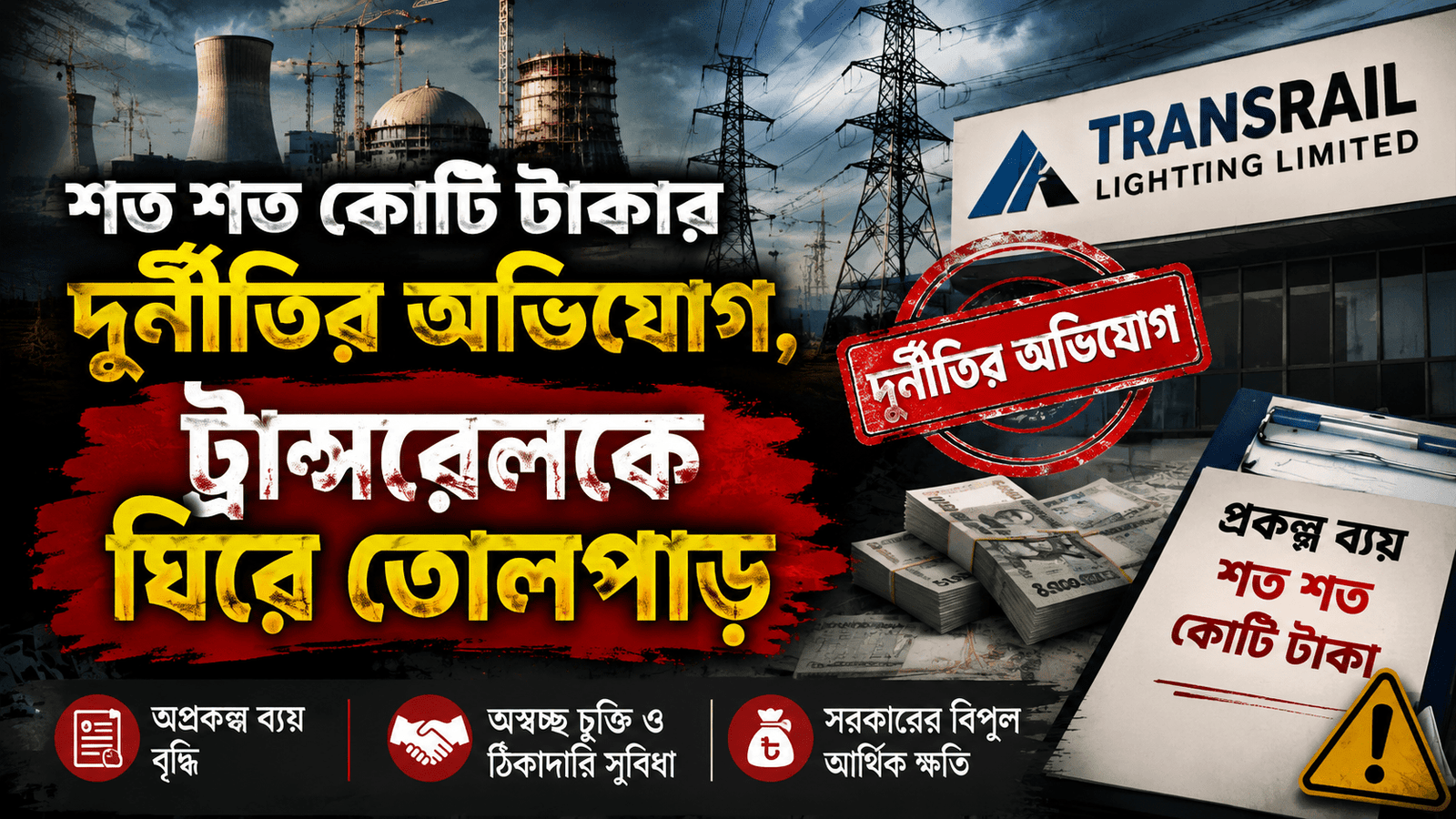

Serious allegations of irregularities and corruption involving hundreds of crores of taka have been raised against Indian contractor Transrail Lighting Limited (TTL) and its Bangladesh Country Director Amrik Singh in connection with the transmission line project being constructed to connect electricity from the Rooppur Nuclear Power Plant to the national grid.
Allegations have also been made of irregularities in project construction, financial management, compensation for land and trees, and tax payments. This raises a major question: How much money was allocated for compensation under the project, how much was released, and how much was actually distributed among the affected people?
A senior official of Power Grid Bangladesh PLC said three companies—KEC International Limited, Transrail Lighting Limited (TTL), and Larsen & Toubro Limited (L&T)—are involved in the work. Indian companies are currently responsible for 17 transmission projects across Bangladesh. Among the companies with the largest number of assignments are L&T, Transrail and KEC.
According to the Power Grid Bangladesh official, Indian contractor Transrail Lighting Limited has committed widespread irregularities and corruption in the execution of its work. The official alleged that hundreds of crores of taka from Bangladesh were siphoned off to India.
Government sources said the 464-kilometre 400 kV transmission line project has been divided into four packages to facilitate faster and smoother implementation.
These include the 102-kilometre Rooppur-Bogura line, the 144-kilometre Rooppur-Gopalganj line, the 147-kilometre Rooppur-Dhaka line, and the 51-kilometre Aminbazar-Kaliakair line.
The 13-kilometre river-crossing component has also been divided into several packages, including a six-kilometre Padma River crossing line and a seven-kilometre Jamuna River crossing line.
Similarly, the 230 kV transmission line project has been divided into three packages: the 60-kilometre Rooppur-Baghhabari line, the 145-kilometre Rooppur-Dhamrai line, and the seven-kilometre Jamuna River crossing line.
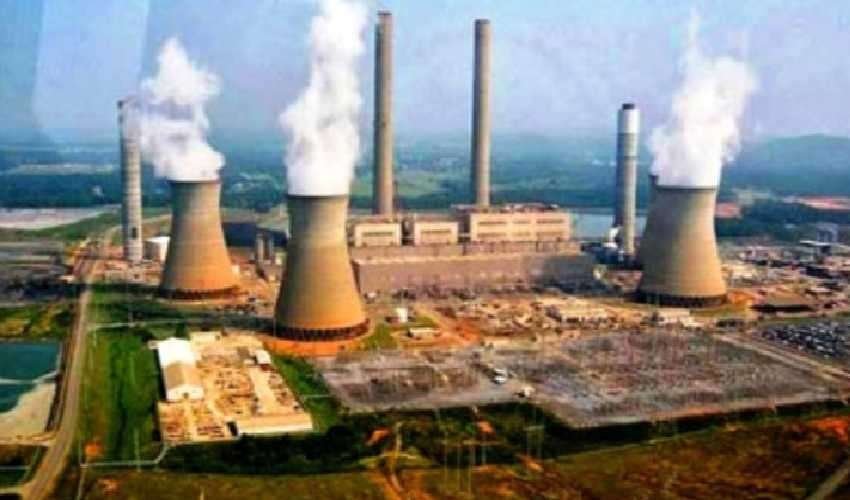
A Power Grid Bangladesh official said the timely implementation of the transmission infrastructure is crucial to the commencement of operations at the Rooppur Nuclear Power Plant (RNPP).
“If the electricity transmission infrastructure is not ready, the Rooppur plant will not be able to begin operations on schedule even if the plant itself is completed on time,” the official said.
The official also said uncertainty has emerged around these critical projects following the sudden departure of Indian contractor personnel.
“Larsen & Toubro, one of India’s leading contractors, was awarded major contracts to build the infrastructure required to transmit electricity from Bangladesh’s first nuclear power plant at Rooppur in Pabna. The company was assigned to install 400 kV and 230 kV transmission lines, which are crucial for the grid synchronisation and testing of the first unit of the Rooppur Nuclear Power Plant. The work was originally scheduled to be completed in early 2025,” the official said.
According to a complaint submitted to the Anti-Corruption Commission (ACC), compensation was supposed to be paid to people affected by land use and tree cutting for the construction of transmission lines along an approximately 82.5-kilometre stretch from Tangail to Dhamrai.
The complainant alleged that around Tk 300,000 per kilometre was supposed to be allocated as compensation for tree cutting, but many landowners and tree owners did not receive the money. Although they were assured that compensation would be paid, they allegedly remained unpaid even after the construction work was completed.
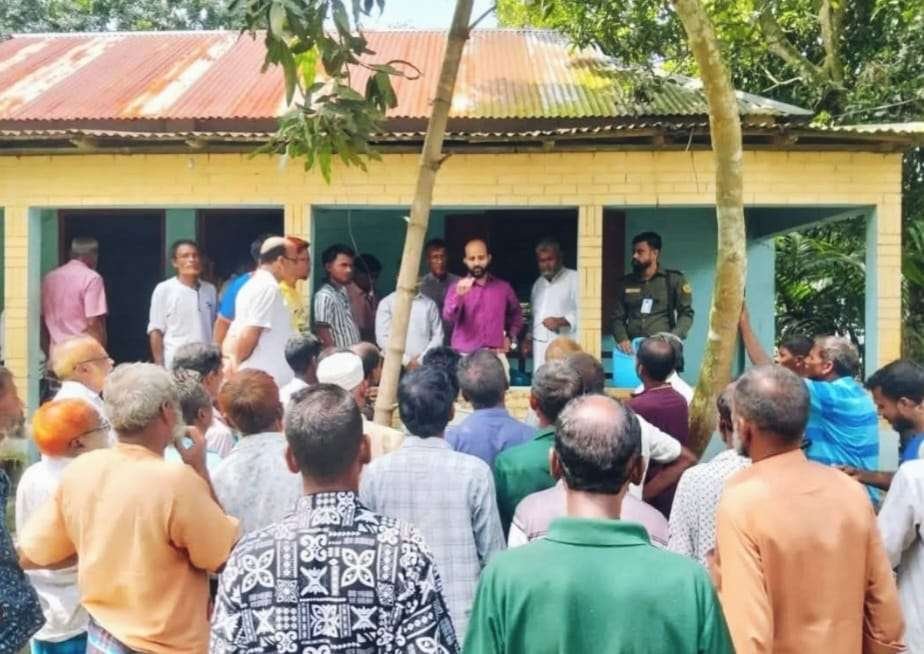
The complaint named several affected individuals, including Fulchan, Md. Nabi, Suma Akter and Aduri, and alleged that they were deprived of compensation payments. According to the complainant, hundreds of people were affected in this manner.
The key question is how much was actually allocated as compensation under the approved project budget, how much was released, and how many genuine affected people received how much money. A review of the complete records would be necessary to establish the actual picture.
The complaint also alleges that proper payments were not made for land acquisition or land use. Local affected residents claim that although their land was used for the construction of electricity transmission towers, they remain uncertain about the process of receiving compensation.
However, it is important to establish from the relevant contracts and project documents which authority has the legal responsibility to compensate landowners—the contractor, the project implementing agency, or the land acquisition authority. Therefore, any investigation should examine not only the contractor’s role but also the activities of the relevant government agencies.
Documents published by Power Grid Company of Bangladesh (PGCB) identify Transrail Lighting Limited as a contractor for various electricity transmission projects in Bangladesh. In an Environmental and Social Management Plan for one of the projects, Transrail is also identified as a contractor involved in project implementation.
PGCB’s annual report for the 2024–25 fiscal year identifies Transrail Lighting Limited as a contractor for a related project and provides information on the project’s physical and financial progress. The document states that the scheduled completion date of the project is September 2026.
In addition, information was published in 2023 regarding an agreement involving a joint venture associated with PGCB and Transrail Lighting for the construction of an approximately nine-kilometre river-crossing transmission line over the Jamuna River.
The complaint filed with the ACC has raised questions not only about compensation but also about the technical quality of the transmission towers.
The complainants alleged that in some areas, piling for the towers was carried out at depths shallower than required. They also alleged that less cement than required and substandard reinforcement bars were used in some locations.
However, verifying the authenticity of these allegations would require reviewing the project’s approved designs, Bill of Quantities (BoQ), records of construction materials, piling depths, geotechnical reports and relevant test results.
One of the most important aspects of the investigation could be tracing the compensation funds.
It is necessary to establish from the project records how much was allocated for land and tree compensation in the Tangail section, through which agency the funds were released, in whose names the beneficiary lists were prepared, and how many genuine affected people actually received the money.
As a nationally important project, it involves substantial government and foreign funds. At the same time, it is directly linked to the transmission of electricity generated by the Rooppur Nuclear Power Plant to the national grid. Therefore, the allegations are not limited to questions of corruption; they also involve the quality of construction, project safety and the proper use of public funds.
The complaint submitted to the ACC further alleged that Transrail obtained the project during the previous government through political influence and commissions. It also alleged that officials of the company had close contacts with several influential figures in the then government.
When contacted, Dr. Iftekharuzzaman, Executive Director of Transparency International Bangladesh (TIB), said allegations of corruption surrounding the Rooppur project have been widely discussed.
“Indian contractor Transrail Lighting Limited and its Bangladesh Country Director Amrik Singh are involved in the alleged corruption surrounding the Rooppur project,” he said.
He added that the current government has declared a zero-tolerance policy against corruption and therefore should conduct a more extensive investigation into the project.
He further said that an increase in the cost of any project creates opportunities for corruption.
নিউজটি শেয়ার করুন